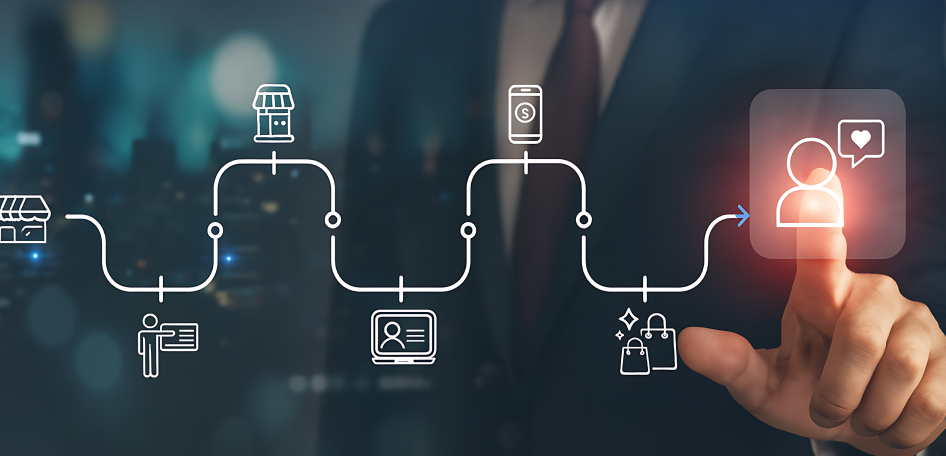
Omnichannel retail has matured beyond channel presence. In 2026, competitive advantage comes from how well systems are integrated, not how many platforms are deployed. Retailers that invest in robust integration services for retail are the ones delivering reliable promises, real-time visibility, and consistent customer experience across ecommerce, stores, marketplaces, and partner ecosystems.
This is where digital integration services for retail move from an IT concern to a board-level growth enabler.
Why integration services for retail are the #1 bottleneck in omnichannel growth
Most omnichannel failures are not UX problems they are integration failures.
When systems don’t communicate reliably, critical journeys break:
- Inventory shown online is unavailable in-store
- Pricing and promotions differ by channel
- Loyalty balances lag or reset
- Order status is inconsistent
- Returns and refunds require manual intervention
The hidden cost compounds quickly:
- Lost conversion at checkout
- Elevated “Where is my order?” contact volume
- Stock-outs in high-demand locations and overstock elsewhere
- Slow refunds increasing chargebacks and dissatisfaction
Executive KPI impact:
- NPS: drops when promises are broken
- AOV: stagnates without unified personalization
- Fulfilment SLAs: missed due to poor orchestration
- Returns cycle time increases due to disconnected OMS and ERP
This is why integration not replatforming is often the fastest path to omnichannel stability.
What “digital integration services for retail” mean in 2026 (and what they must include)
Retail integration has evolved beyond point-to-point connections.
Definitions:
- Omnichannel: channels connected, often loosely
- Unified commerce: shared data models and business logic
- Composable commerce: modular platforms assembled through APIs
In practice, most retailers operate in a hybrid state, making digital integration services the critical backbone.
Non-negotiables in 2026:
- API-first design for all new integrations
- Event streaming for inventory, orders, and fulfilment updates
- Centralized identity and consent management
- Master data synchronization across systems
- Observability: logs, traces, alerts for integration flows
Minimum viable integration (MVI) checklist:
- Real-time inventory events
- Shared customer identity across channels
- Central order orchestration
- No business logic locked inside channels
This approach avoids costly re-platforming while unlocking measurable outcomes.
Omnichannel customer experience outcomes only possible with modern integration services
True omnichannel customer experience depends on real-time orchestration.
With modern integration services, retailers enable:
- Real-time inventory promise across web, app, store, and marketplaces
- BOPIS, ship-from-store, and endless aisle without manual overrides
- Returns anywhere (BORIS) with automated refund and credit logic
- Consistent personalization and loyalty across touchpoints
CX Maturity Scorecard (self-assessment):
- Inventory accuracy >95% across channels
- Returns processed within 24–48 hours
- Loyalty points synchronized in real time
- One customer profile across all journeys
Gaps here are almost always integration gaps.
The blueprint: ecommerce integration + POS + OMS + CRM + loyalty + ERP
Scalable omnichannel requires a clear architectural blueprint.
Reference architecture (described):
- Systems of Record: ERP, OMS, POS (authoritative data)
- Systems of Engagement: ecommerce, mobile apps, CRM, loyalty
Integration approach:
- API-first for synchronous journeys (checkout, pricing)
- Event-driven integration for scale (inventory, fulfilment, returns)
Data synchronization patterns:
- Near-real-time for inventory, orders, and pricing
- Batch for finance, settlements, and reporting
This separation improves resilience and performance at scale.

B2B integration for retail: suppliers, 3PLs, marketplaces, distributors
Retail is increasingly a B2B integration problem.
Modern B2B integration supports:
- APIs for real-time partners
- EDI for legacy suppliers
- Partner portals for onboarding and visibility
Key outcomes:
- New supplier onboarding in weeks
- Marketplace integration covering catalog, pricing, inventory, and SLA reporting
- Faster 3PL and distributor connectivity
Selecting the right integration services model: iPaaS vs custom APIs vs microservices
iPaaS works best when:
- Speed-to-market is critical
- Standard connectors exist
- Governance and monitoring are required
Custom integration wins when:
- Business logic is complex
- Retail workflows are unique
- Latency requirements are strict
Common pitfalls:
- Point-to-point spaghetti
- Vendor lock-in
- Accumulating “integration debt”
Most enterprises succeed with a hybrid integration model.

Digital integration services security + compliance
Security must be embedded into integration design.
Key controls:
- Consent-aware data flows
- Identity federation
- PII minimization and tokenization
- Full audit trails and observability
Regional considerations:
- UK/EU: GDPR, cross-border data transfers
- Middle East: data residency expectations and sector regulations
How retail integration borrows from BFSI, Telco, and Government
Retail leaders increasingly adopt patterns from other sectors:
- BFSI: reconciliation for payments, refunds, chargebacks
- Telco: event-driven integration at massive scale
- Government: identity, accessibility, and data governance
These practices increase enterprise credibility and resilience.
UK/Europe vs Middle East omnichannel realities
UK/Europe: VAT complexity, cross-border fulfilment, marketplace dominance, privacy controls.
Middle East (KSA/UAE/Bahrain/Qatar): rapid rollout, free zones, last-mile partnerships, data residency, bilingual experiences.
Integration design changes by region: identity models, address formats, tax engines, logistics partners, hosting strategies.
What CIOs and CTOs should demand from integration services for retail providers
RFP-ready checklist:
- Delivery model: discover → roadmap → build → run
- SLAs: uptime, latency, incident response
- Team: integration architects, data engineers, security, SRE
- Proof: retail accelerators and reference implementations
- Commercials: outcome-based milestones, managed services
Digital Integration Services for Retail Industry: Why choose Torry Harris
Torry Harris delivers enterprise-grade digital integration services for retail, enabling retailers to build scalable, resilient, and future-ready omnichannel ecosystems. With a strong foundation in API-led and event-driven integration architectures, Torry Harris helps retail organizations unify ecommerce, POS, OMS, CRM, loyalty, ERP, and partner systems without disrupting existing platforms. The focus is on solving real retail challenges: real-time inventory visibility, seamless order orchestration, consistent customer experience, and faster partner onboarding across complex B2B and marketplace environments.
Why leading retailers choose Torry Harris:
- Integration-first expertise: Deep specialization in integration services, not generic implementation
- API-led & event-driven architectures: Built for scale, peak traffic, and real-time omnichannel journeys
- Retail-specific accelerators: Reusable connectors, reference architectures, and integration patterns
- End-to-end delivery: Discover → design → build → run with managed integration services
- Regional strength: Proven delivery across the UK, Europe, and the Middle East, with GDPR and data residency awareness
- Reduced integration debt: Governance, observability, and security built into every integration layer
Frequently asked questions
Inventory, OMS, POS, ecommerce, and CRM should be prioritized to stabilize customer-facing journeys.
Through event-driven ecommerce integration that publishes inventory updates from stores, warehouses, and suppliers.
Omnichannel connects channels; unified commerce shares data and logic across them.
Priority journeys typically take 8–16 weeks; full-scale programs may span 6–12 months.
Integration debt, unclear ownership, and poor observability mitigated through governance and monitoring.

|
Shreya KapoorSenior Content Strategist |