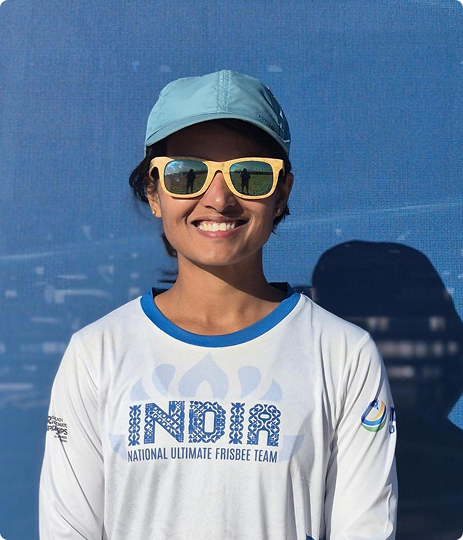
At Torry Harris, our conversations about life “beyond” work often focus on how we pursue interests outside of our workplace. For Sheetal Raghupati, this pursuit involved competitive participation in Ultimate Frisbee, leading to her selection for the Indian Mixed Masters team at the World Masters Ultimate Club Championships held in Portimão, Portugal.
Ultimate Frisbee is a fast-paced and physically demanding team sport and what sets the game apart is how its played. Even at international levels, matches are conducted without referees. Players are responsible for calling fouls and resolving disputes collectively. Physical fitness and strategy matter, but so does judgment - knowing when to push forward and when to step back for the team. This balance between competitiveness and integrity is known as the “Spirit of the Game,” and it underpins the sport at every level.
This emphasis on discipline and self-regulation is reflected in Sheetal’s own journey. Sheetal’s progression from playing locally in Bengaluru to representing India internationally reflects a steady training path and a long-term commitment built over time.
An accidental introduction, a deliberate commitment
Sheetal did not come from a competitive sporting background. While studying at BMS College of Engineering, her focus was largely academic. She was introduced to Ultimate Frisbee through a group of seniors who were part of a Bengaluru-based club, TIKS (Thatte Idli Kaal Soup), and were looking to bring more women into the team.
"I was hanging out with them, and they had an opening for female players," Sheetal recalls. "What appealed to me was that it was non-contact, but an incredible physical workout. I started playing for fitness, but I stayed for the game."
What began as a casual interest gradually evolved into commitment. Over the following years, Sheetal consistently participated in sectional, regional, and national tournaments - steadily bettering her understanding of the sport and skills through consistent training.
National selection and preparation
By 2016, Sheetal had become a familiar presence in the Indian Ultimate Frisbee circuit. After an initial, unsuccessful attempt to make the national squad, she set her sights on the Mixed Masters Division - reserved for players over 30 and marked by a high bar for experience, consistency, and game intelligence.
Selection involved multiple rounds of national tryouts, followed by an intensive seven-month preparation for those selected. For Sheetal, this meant fitting structured training - conditioning, drills, and tactical sessions – while balancing a full-time role at Torry Harris.
“There was no dramatic shift,” she says. “It came down to maintaining routine and continuing to train alongside work commitments.”
Competing in Portugal - World Frisbee Championship
In late 2025, the Indian Mixed Masters team arrived in Portimão, Portugal, to compete against teams from 18 countries. Much of their preparation had taken place in the humid environment of Chennai. The transition to colder European winter conditions, and a very different sand texture, was immediate and demanding.
“The conditions affected how the game played out,” Sheetal notes. “It took time to adapt, both physically and tactically.”
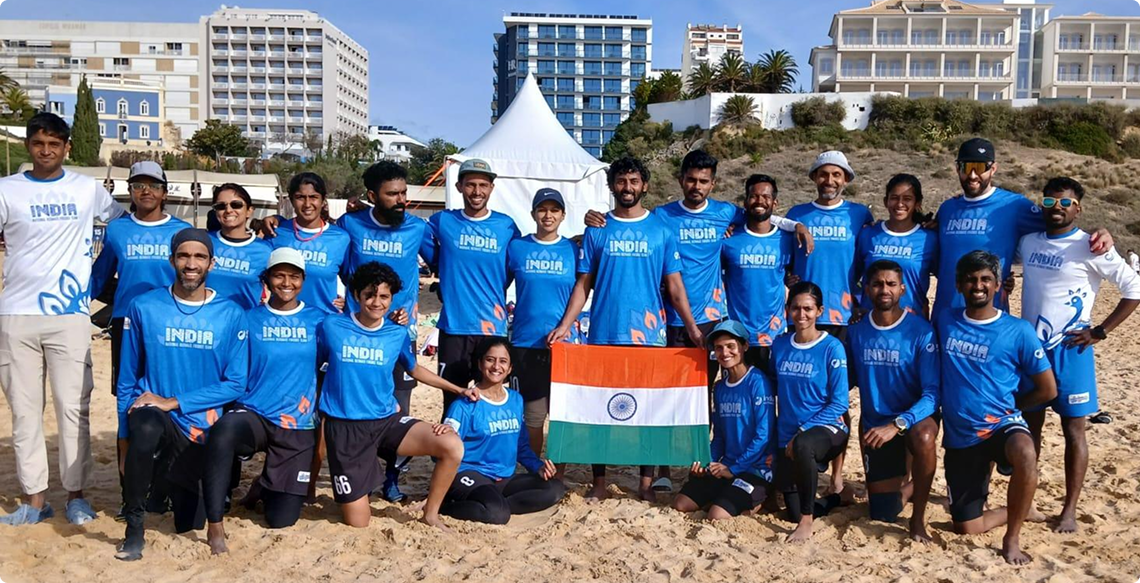
India’s tournament began unevenly. One early match against Team USA, ranked first in the world in the division, became an important reference point. India lost the match, but the experience validated the team’s pace and consistency required to compete at that level.
"We were playing the best in the world. Once the initial fear vanished, we realized we had nothing to lose. We started 'trading' points; matching them move for move without making mistakes. We lost the match, but we won our confidence. It was the turning point that boosted our morale for the rest of the tournament."
Following this match, the team recalibrated its approach. Performances against subsequent opponents became more consistent, resulting in several wins and a remarkable climb of four places in the global rankings by the end of the championship.
Support from the home base
Balancing international competition with a full-time role required careful planning and coordination. Sheetal implicitly credits the support she received from her team at Torry Harris for making it possible. Project timelines were planned in advance, responsibilities were redistributed while she was away, and communication remained steady throughout the tournament period.
"My team was super excited," she says. "They made sure I had no pressure while I was away for two weeks. In fact, they kept track of the scores and cheering me on from Bengaluru. That kind of support is what allows you to pursue a dream like this."
The tournament concluded on a personal note of recognition. In the penultimate match, Sheetal was awarded the team’s Defense Medal for a decisive defensive play - an acknowledgment, she says, that validated months of disciplined preparation and perseverance.
What carries forward
Reflecting on her experience after returning to Bengaluru, Sheetal does not frame her experience as a completed journey, but as an ongoing practice. For her, the experience wasn’t about a single tournament or a medal; it was about the quiet discipline of showing up even when no one is watching and continuing to invest effort long before the results become visible.
That same mindset now shapes how she approaches her work. The patience she developed through the sport - learning to stay steady, respond calmly to setbacks, and keep moving forward without rushing outcomes - has become part of how she works and makes decisions. The habits built in pursuit of a passion don’t fade when the game ends; they carry forward, influencing how you think, act, and measure progress long after.