Managed cloud - built for enterprises running hybrid and multi-cloud at scale
We help enterprises transform cloud complexity into a governed platform for sustainable growth,
- Standardizing hybrid and multi-cloud estates,
- Governing cost and access at the platform layer, and
- Running it as a continuously optimized environment for applications and AI workloads.
THE PROBLEM THIS PAGE SOLVES
The ROI gap is mostly an operating model problem.
Workloads move to the cloud, but the way the estate is run does not change. Without a redefined operating model, cloud migration may not pay off.
Cloud costs outpace the workloads they support, governance is rebuilt before every audit, and reliability depends on who is on call. AI compounds each of these - placing demands on compute and data that reactive operations cannot absorb.
The six root causes:
01
Different rules in each environment govern hybrid and multi-cloud estates, so every control is reimplemented, and every audit starts from scratch.
02
Cloud spend grows faster than the workloads driving it, with no unit economics to explain why.
03
Security and compliance were bolted on after deployment instead of being built into the platform.
04
Configuration drift, where no two environments behave the same way, and each change carries assumptions that the last one did not.
05
Incident response stands in for engineered reliability, with failures noticed by users before monitoring catches them.
06
AI workloads introduce new demands on compute, data access, governance, and resilience that existing cloud environments were not designed for.
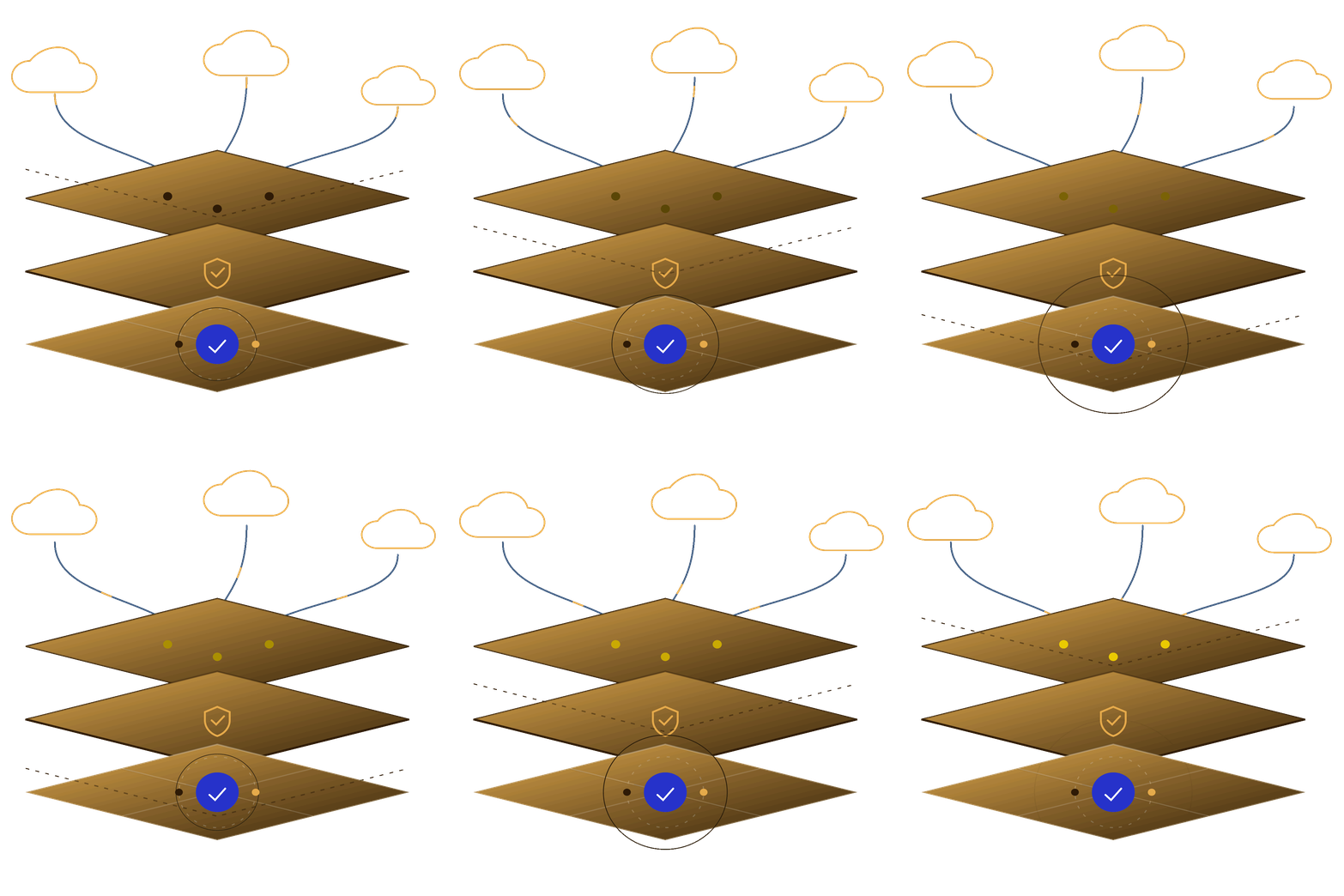
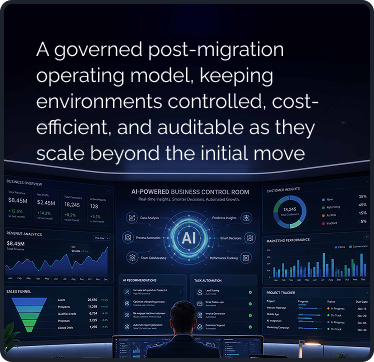
Torry Harris standardizes infrastructure into reproducible patterns, embeds cost, security, and compliance controls into the platform layer, and runs the estate as a continuously optimized system - as enterprise applications and AI workloads scale on top of it.
The Three-layer framework
From standardized platform to governed operations
A predictable cloud operating model is not a single project but a series of connected decisions about how the estate is built, what governs it, and how it is run.
Most enterprises arrived at the cloud through a sequence of projects, each making its own architectural choices. As a result, the configuration drifts between regions, and every new workload becomes a bespoke build. That variance is where outages, emergency patches, and compliance exceptions come from.
Torry Harris establishes consistent infrastructure patterns across your hybrid and multi-cloud estate without re-platforming what already works. We implement Infrastructure-as-a-Service models, landing zones, and codified configurations that make environments reproducible and governed by design.
This approach results in:
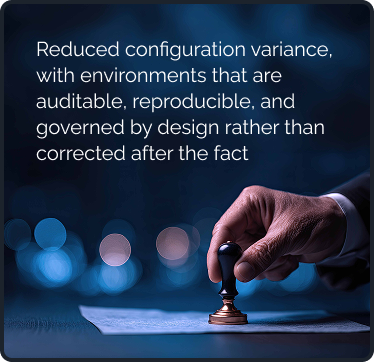
Environments that are reproducible, auditable, and governed by design
Fewer emergency patches and compliance exceptions caused by configuration drift
AI-ready landing zones that give data platforms and AI workloads a consistent, governed starting point
Accelerated developer onboarding, with access to governed platform services and fewer manual provisioning steps
Consistent platform services across business units, so cloud patterns become reusable enterprise assets
THE RISK IN SKIPPING THIS LAYER
Enterprises that skip standardization end up governing multiple estates instead of one. Every control is reimplemented per environment, every audit starts from scratch, and the variance results in unpredictable outages.
Platforms & Accelerators We Deploy
Assessment & Planning
Infrastructure-as-Code
Container Platforms
Database Migration
Governance applied after deployment is a workaround, not a control. Cost overruns land on the monthly bill after provisioning. Compliance evidence gets assembled the week before an audit. AI adoption has pushed the perimeter past where infrastructure controls reach.
Torry Harris embeds governance into the platform layer. Policy-as-code enforces standards at provisioning. FinOps practices tie consumption to unit economics. Security controls operate continuously, not just at audit time.
This approach results in:
Cost is tied to unit economics and visible at provisioning, not in the monthly bill
Cloud spend aligned to business value, with FinOps practices and workload-level accountability, so investment decisions are made with visibility into actual workload costs
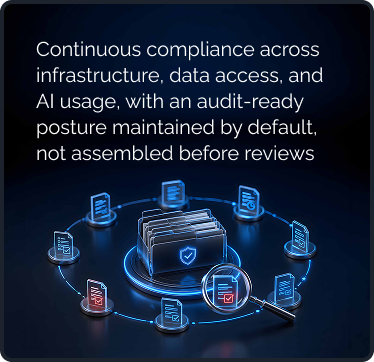
Compliance that is maintained continuously, irrespective of audits
Security and policy enforced as code, at both provisioning and run time
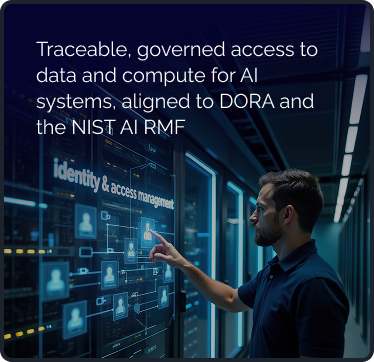
Governance that extends to data access and AI usage, aligned to DORA and the NIST AI RMF
THE RISK IN SKIPPING THIS LAYER
Skip this layer, and control never catches up with consumption. Costs surface too late to act on, compliance turns into an annual scramble, and AI workloads reach data and actions no one signed off on.
Platforms & Accelerators We Deploy
Policy-as-Code
Security
FinOps
Compliance Frameworks
Cloud reliability and cost discipline erode the moment detection lags behind failure. Periodic cost reviews catch waste a quarter late, and reactive incident response detects failures only after users encounter them.
Torry Harris runs the estate as a continuously optimized, policy-driven environment. Real-time monitoring, automated remediation, and AIOps address cost exposure, performance degradation, and policy violations as they occur.
This approach results in:
Faster application and AI delivery cycles, as a stable, self-managing platform, remove the infrastructure bottleneck from every release
Higher engineering productivity, because internal teams spend less time on platform maintenance and more time building services
Faster innovation cycles, with monitoring, remediation, and optimization built into the operating model
AIOps-driven operational efficiency, with cost, performance, and policy signals acted on before queues grow
Resilience and efficiency that hold as AI workloads change profile by the hour
THE RISK IN SKIPPING THIS LAYER
A standardized, governed estate run reactively is predictable until load arrives. The operating model decides whether the cloud stays efficient as AI demand grows. Without continuous optimization, a well-built estate still drifts toward waste, and the efficiency the design promised never reaches operations.
Platforms & Accelerators We Deploy
Cloud Monitoring
SRE
AIOps
FinOps
Our Services
Our managed cloud and governance service capabilities
Cloud managed services
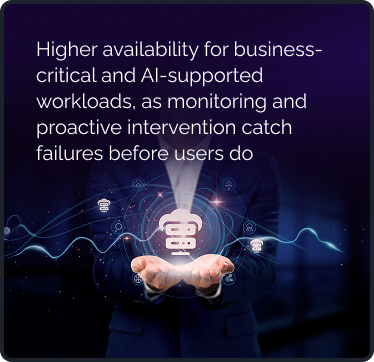
Your engineers shouldn't be hearing about cloud failures from your customers.
Managed cloud operations replace firefighting with engineered reliability.
Cloud estates outscale their operating models. When that happens, incidents surface via users, senior engineers absorb maintenance instead of building, and AI workloads expose the headroom that reactive operations never had.
Torry Harris manages the infrastructure and platform layers as an engineered service: full-stack cloud monitoring, SRE-led reliability engineering with defined service levels and error budgets, and incident management with structured response paths. Environments stay stable under load. Your engineering team focuses on building, leaving the management overhead to us.
In Practice - UK TELCO
For a leading UK Telco, Torry Harris built a Confluent Kafka event-streaming platform with predictive analytics that cuts downtime and fraud while improving integration speed by 25%. These are operations that anticipate failure rather than wait for it, surfacing issues as they develop before they reach the customer.
Outcomes you achieve
Cloud
transformation
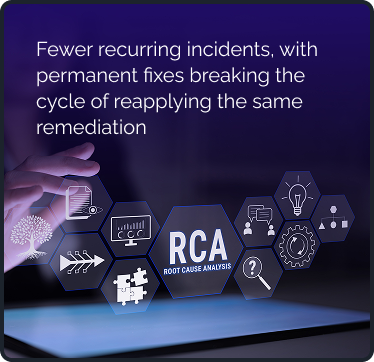
Configuration drift is silent until the moment it becomes an outage.
Standardized infrastructure removes the variance before it compounds into operational debt.
When environments are built project by project, configuration drifts, and patterns diverge across regions. The cost accumulates quietly: emergency patches, compliance exceptions, and operational debt that make every change riskier.
Torry Harris designs and implements cloud infrastructure models that establish consistent, scalable environments across hybrid and multi-cloud estates. Configurations are codified, reproducible, and governed by design.
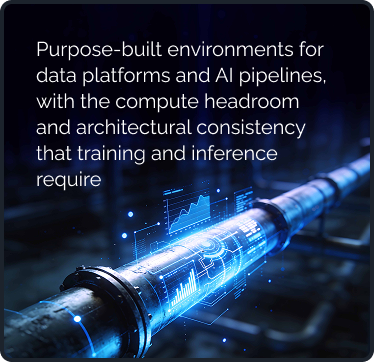
An environment provisioned today behaves the same as one provisioned six months ago. That consistency gives data platforms and AI pipelines the compute headroom and architectural repeatability that model training and inference depend on.
In Practice - BT GROUP
Automation helped BT build a self-service Digital Cloud Services Platform that replaced manual provisioning with governed, repeatable environments that developers use. GitOps and automation cut onboarding from two weeks to three hours and reduced time-to-market by 40% by engineering out the human error that manual provisioning introduced. We design infrastructure as a product with standards built in, not as a series of one-off builds.
Outcomes you achieve
Cloud integration
Migrating your systems to the cloud is not the same as making them work together.
Cloud integration makes those connection points reliable, so data moves with the fidelity that analytics and AI demand.
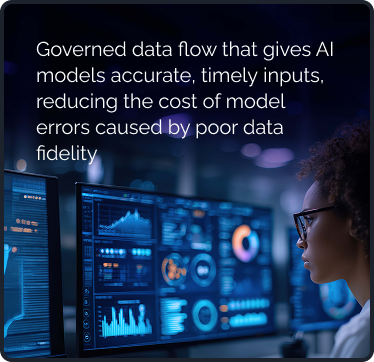
A migrated cloud estate delivers no value if the systems connected to it pass bad data to each other. Where integration is weak, AI models get stale inputs, workflows stall, and data quality issues surface far from their source.
Torry Harris establishes integration models that make cross-environment interaction reliable and observable. We build governed data flows that carry accurate, timely inputs to every system and AI model that depends on them.
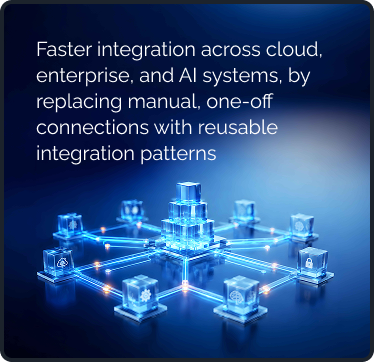
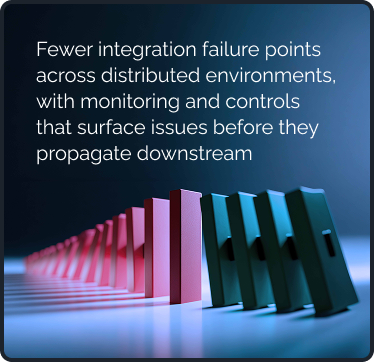
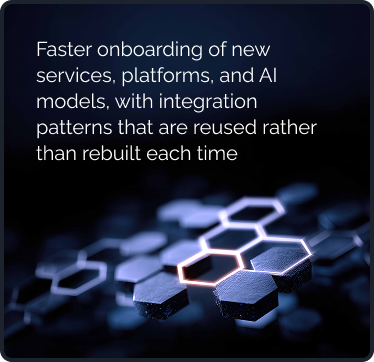
Monitoring and controlling surface issues before they propagate downstream. Integration patterns are reusable, so onboarding a new platform or model does not start from scratch.
IN PRACTICE - GBK
Torry Harris migrated Gulf Bank of Kuwait to IBM App Connect Enterprise v12 with Kong as the API gateway, raising integration efficiency and security by 50%. The integration layer is where most cloud programs fail, and making it reliable, governed, and secure is what THIS has built for 25 years.
Outcomes you achieve
Cloud migration
The value a cloud migration delivers depends almost entirely on the work that happens before the first workload moves.
Structured migration removes the rework cycles that stretch cloud transitions for months.
Most cloud migrations take longer than planned because the sequencing was not mapped before the first workload moved. Wrong sequencing surfaces problems after go-live, when fixes are most expensive. Most transitions slip past their original timeline through rework cycles that structured execution prevents.
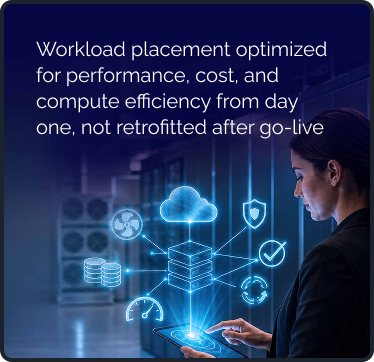
Torry Harris executes migration as a structured, risk-managed process. We map dependencies up front, validate workload behavior at each stage, and build rollback into every phase. Workloads are placed for performance, cost, and compute efficiency from day one. The estate lands in a governed operating model.
In Practice — SCHNEIDER ELECTRIC
When Schneider Electric moved its API platform and developer portal to Microsoft Azure API Management, Torry Harris migrated 49 API products and 44 proxies in line with a cloud-first strategy, cutting platform cost by 30% and improving API response times by 40%, with minimal disruption to developers. Migration risk concentrates at the boundary between the old estate and the new, and connecting that boundary cleanly is what THIS has done for 25 years.
Outcomes you achieve
Cloud management & security
Your governance was built for infrastructure. Your AI workloads don't respect that boundary.
Policy-driven governance extends control to data access, model execution, and usage at scale.
Perimeter controls were designed for infrastructure. AI workloads ignore that boundary, following the data they consume and the actions they take. Treat compliance as a periodic audit and the gap between policy and practice widens with every new model deployed.
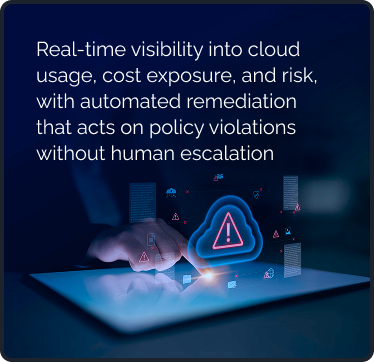
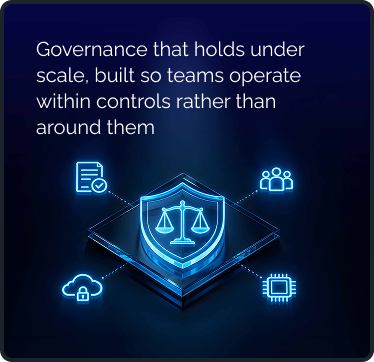
Torry Harris implements policy-driven frameworks that treat security and compliance as continuous, embedded properties of the platform. Controls operate in real time across infrastructure, data access, and AI usage. Automated remediation acts on policy violations before they require human escalation. Governance is designed to hold as adoption grows, so teams operate within the controls.
In Practice — VODAFONE
Governance only works when standards are enforced consistently. For Vodafone, Torry Harris automated API conformance and stood up an API Guild that cut API deviations by 90% while saving 76% over manual integration. We embed controls so standards are held by default, and align them to the frameworks enterprises answer to, including DORA and the NIST AI RMF, so teams operate inside the controls rather than around them.
Outcomes you achieve
Start the Conversation
Your cloud estate keeps growing.
The operating model holding it together must change with it.
The cost, risk, and reliability problems most enterprises have with cloud are not infrastructure problems. Instead, they are problems related to the operating model, such as how the estate is standardized, governed, and run. Torry Harris builds the foundation that standardizes what scales, governs what changes, and operationalizes the continuous optimization capability that sustains it.
Let's start with an assessment of how your cloud is being run today.
PROOF AT SCALE

Insights


WHITEPAPER
Successful cloud migration strategies for a new business era
read the whitepaper
CASE STUDY
Automation helped BT scale new heights with a self-service cloud platform
read the article
CASE STUDY
Torry Harris helps Three Ireland's 48 delivers a differentiated digital experience
read the article
Frequently asked questions
Cloud managed services are often most valuable when operational complexity begins to outpace internal capacity. This typically occurs during periods of cloud expansion, modernization, multi-cloud adoption, or rapid application growth where maintaining visibility, reliability, governance, and cost control becomes increasingly challenging.
Mature cloud operations improve service reliability, strengthen governance, increase delivery agility, optimize cloud investments, reduce operational risk, and create a stronger foundation for innovation and long-term business growth.
AI initiatives depend on reliable infrastructure, scalable operations, strong governance, and cost visibility. Cloud managed services help establish the operational foundations required to support AI workloads while maintaining performance, security, and financial control.
The right provider should do more than manage infrastructure. Look for a partner that can improve operational visibility, reliability, security, and cloud cost efficiency while supporting your long-term technology and business objectives. The goal is not simply to maintain cloud environments, but to help them evolve as the organization grows.
For over 25 years, Torry Harris has helped organizations manage cloud complexity through integrated operational frameworks, automation-led practices, and cloud expertise that improve visibility, reliability, governance, and cost efficiency at scale.
Contact us
Follow us


