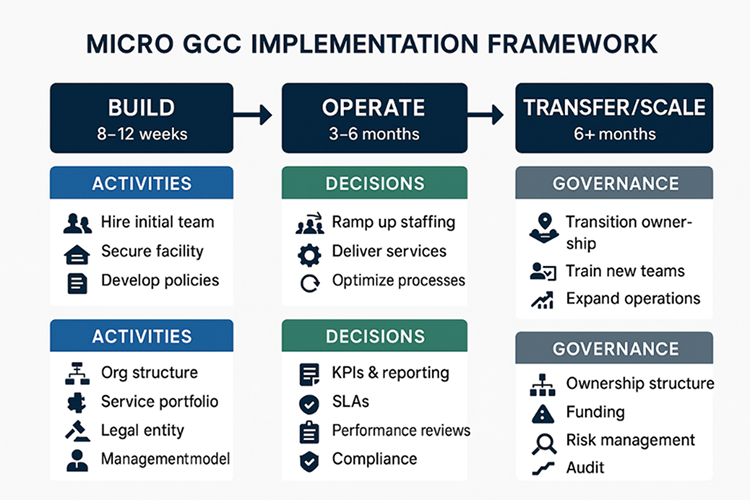
Micro GCCs work best in organizations with a strong accountability culture and an
outcome-driven approach. It requires strong leadership at the pod level–leaders who have the vision and
business acumen to build for scale and problem-solving skills to execute the plan. Equally important is to
create a high-performing culture that attracts and nurtures talent to help achieve the organization's
goals for transformation and innovation.
Organizations considering micro GCCs benefit from established frameworks and
methodologies. Torry Harris' Framework for Excellence provides structured methods to mitigate the
challenges of startup activity by leveraging established governance models, proven integration patterns,
and regulatory templates. The AIM framework emphasizes outcome-driven governance, reusable platform assets,
and measurable value creation-precisely what micro GCCs require to operate successfully from conception.
Ultimately, the best combination is micro GCCs maintaining control over their core IP
and strategic capabilities, while the vendor manages variable workloads. The choice of a hybrid model
offers speed with architectural control, as well as cost flexibility tailored to specific business needs.