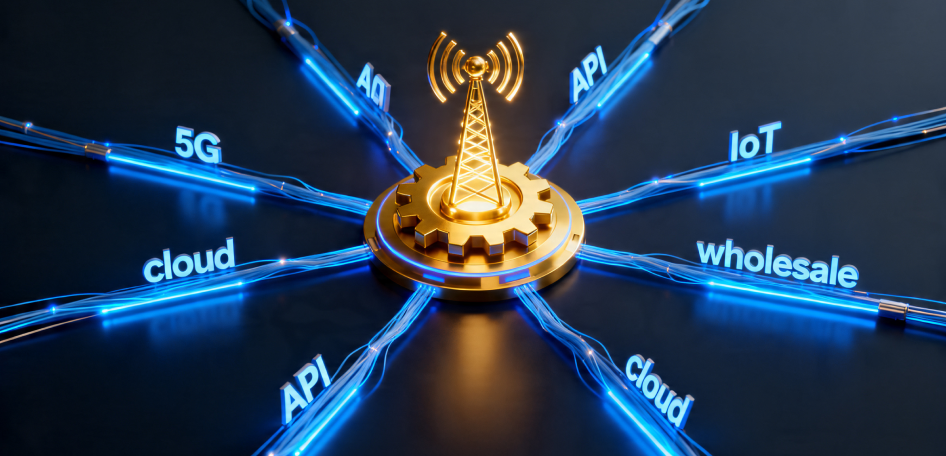
The traditional marketplace model is no longer enough for sustainable telco monetisation. While many telcos have invested in building a digital platform and expanding their partner ecosystem, these efforts often fall short of delivering long-term growth.
The real shift is toward ecosystem orchestration—where telcos don't just participate in a marketplace, but enable others to build and run their own.
Why a Partner Ecosystem Alone Is Not Enough
Building a partner ecosystem has become a common strategy. Telcos onboard vendors, integrate services, and offer them through a centralized marketplace.
But this model has limitations:
- It keeps telcos in a reseller role
- It limits control over value creation
- It caps telco monetisation potential
Without deeper ecosystem orchestration, the digital platform remains a distribution channel rather than a growth engine.
The Shift: From Marketplace to Platform Infrastructure
The next evolution of the digital platform is not about expanding the telco's own marketplace—it's about enabling many marketplaces.
Instead of asking "what can we sell through our marketplace?",
telcos must ask:
👉"Whose marketplace can we power?"
This is where ecosystem orchestration becomes critical.
Telcos provide the underlying digital platform, allowing SMEs, enterprises, and industry players to:
- Build their own marketplace
- Run their own commercial models
Manage their own partner ecosystem

Empowering Others to Build Marketplaces
In this model, the telco becomes the foundation of multiple marketplaces—not just one.
Each participant in the partner ecosystem can operate its own digital platform experience:
- SMEs create storefronts and onboard suppliers
- Enterprises build industry-specific marketplaces
- Vertical ecosystems emerge across sectors
This approach transforms ecosystem orchestration into a scalable growth strategy, where every new marketplace drives incremental telco monetisation.
A New Model for Telco Monetisation
By enabling others to run their own marketplace on a shared digital platform, telcos unlock new revenue streams:
- Platform subscriptions across the partner ecosystem
- Transaction-based revenue from multiple marketplaces
- API and data monetisation
- Settlement and billing services
This creates a compounding model of telco monetisation, where growth is driven by the expansion of the ecosystem—not just product sales.
From Partner Ecosystem to Ecosystem Orchestration
The future is not about building a bigger partner ecosystem within a single marketplace.
It's about true ecosystem orchestration:
- Multiple marketplaces
- Multiple operators
- One underlying digital platform
Telcos that embrace this shift will move from being participants in a marketplace to becoming the infrastructure powering entire industries.
Final Thought
A partner ecosystem is no longer the destination—it's just the starting point.
The real opportunity lies in enabling others to build and scale their own marketplace and digital platform, powered by your infrastructure.
That's the future of ecosystem orchestration—and the next frontier of telco monetisation
For deeper insights on this topic, download the full report
Frequently asked questions
Telecom monetization involves shifting from traditional connectivity sales to generating revenue through 5G network APIs, data analytics, and digital services. Operators are transforming networks into platforms to deliver on-demand services, such as location intelligence and AI-driven insights, projected to reach $14.8B by 2029.
Telecom data monetization involves transforming vast network, location, and user data into revenue-generating insights or services, with the market expected to reach $14.8B by 2029. Operators monetize data internally to boost efficiency, and externally, using anonymized data for advertising, urban planning, IoT, and fraud prevention through api based monetization.
An API (Application Programming Interface) in telecom is a set of rules and protocols that enables software applications to communicate with the underlying telecom network infrastructure and its capabilities. This allows developers to integrate network services like messaging, voice, location, and security into their own applications without needing to understand the complex inner workings of the network itself.
Telecom API monetization is a strategy used by communications service providers (CSPs) to generate revenue by exposing their network capabilities-such as location, authentication, and quality of service (QoS)-to third-party developers and enterprises through standardized interfaces.
5G monetization refers to the strategies, business models, and tools (such as network slicing, API-driven services, and B2B partnerships) that communication service providers (CSPs) use to generate revenue from their 5G network investments.

|
Pankaj KulkarniSenior Manager Research & InisghtsTorry Harris Integration Solutions |